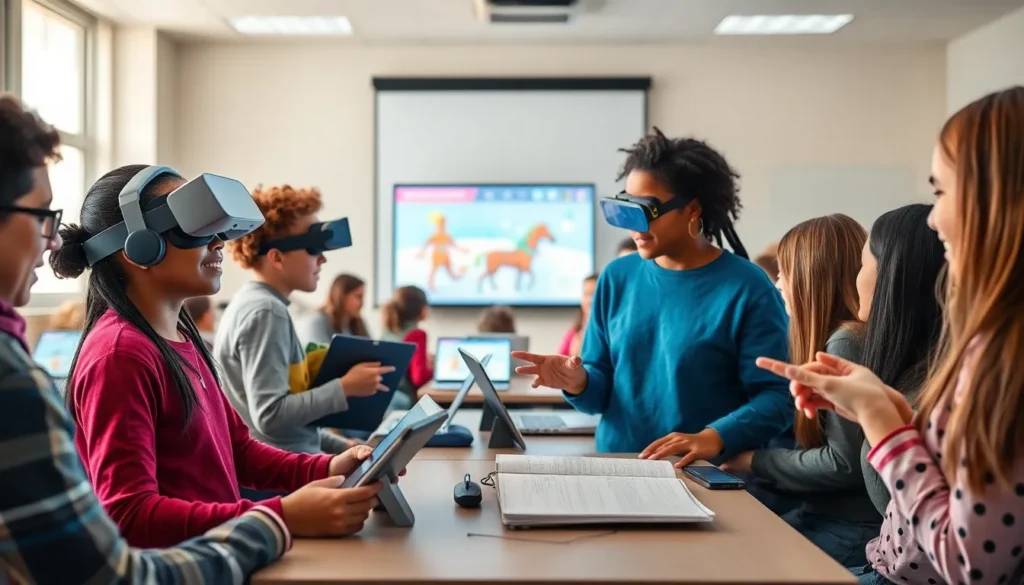
Imagine a classroom where students don’t just sit at their desks staring blankly at textbooks. Instead, they’re immersed in vibrant, interactive worlds where learning feels more like fun than work. Welcome to the realm of edtech games. These innovative tools are not just a flash in the pan: they’re redefining how education is approached, making learning engaging and effective. So, buckle up for an exciting journey exploring how edtech games are changing the educational landscape, one level at a time.
What Are Edtech Games?

Edtech games blend educational content with gaming elements to create engaging learning experiences. They come in various formats, from mobile apps to computer-based programs, designed to teach both knowledge and skills in an entertaining manner. By integrating gameplay mechanics, such as scoring, competition, and rewards, these games ignite motivation and enthusiasm among students.
In this modern era, where digital literacy is pivotal, edtech games serve as a bridge between traditional learning methods and the interactive capabilities of technology. Rather than passively consuming information, students interact with concepts, solving problems as they journey through various challenges. Think of them as the superheroes of the educational world, transforming the mundane into the magical.
Benefits of Edtech Games in Education
The advantages of edtech games extend far beyond mere entertainment. Here are some noteworthy perks:
Enhanced Engagement
When students are actively involved in their learning, retention increases significantly. Edtech games captivate their attention, making complex subjects like math and science intriguing through interactive narratives and competitive elements.
Individualized Learning
These games often incorporate adaptive learning technologies. They adjust in complexity based on the player’s skill level, allowing each student to learn at their own pace. This individual attention can help cater to diverse learning styles and capabilities.
Development of Critical Skills
Besides subject knowledge, edtech games promote critical thinking, problem-solving, and collaboration. Students learn not just to solve equations or memorize facts, but to think creatively and work with their peers to navigate challenges.
Immediate Feedback
One of the most significant advantages is the instant feedback mechanism. When a student answers a question in a game, they receive immediate input on their performance. This helps them identify gaps in understanding promptly, leading to quicker improvements.
Popular Types of Edtech Games
The edtech landscape is rich with diverse game types that cater to various subjects and age groups:
Simulation Games
These allow students to immerse themselves in realistic scenarios, such as running a virtual business or managing ecological systems. For example, simulating historical events can enhance students’ understanding of social studies in an engaging way.
Puzzle and Strategy Games
These games require critical thinking and strategic planning, making them ideal for subjects like mathematics and science. They challenge students to apply their knowledge practically, encouraging deeper understanding.
Quizzes and Competitive Games
Think of platforms like Kahoot, where students can compete in live quizzes. This playful competition fosters a spirited learning atmosphere while reinforcing knowledge in real-time.
Story-Based Games
Edtech games with narrative arcs guide learners through challenges rooted in storytelling, which helps them remember information better. These games can cover everything from grammar to history, ensuring that students are learning as they play.
Effective Integration of Edtech Games in Classrooms
Pulling off a successful integration of edtech games in educational settings isn’t a walk in the park, but with the right strategies, it can be rewarding. Here’s how educators can seamlessly incorporate these games:
Setting Clear Learning Objectives
Before diving into gaming, it’s crucial for educators to define what they aim to accomplish. Whether it’s improving literacy rates or boosting engagement in math, setting clear objectives will guide the choice of games.
Blending Traditional and Digital Methods
Rather than replacing traditional teaching methods, edtech games should complement them. A balanced approach, wherein games serve to enhance lessons, can lead to better overall learning experiences.
Training for Educators
Teachers should feel confident using edtech tools. Providing professional development programs can empower educators to harness the full potential of these games, maximizing their benefits for students.
Engaging Students in Game Selection
Involving students in the selection process can increase their investment in learning. When they’re part of the decision-making, they’re more likely to embrace the game-based learning experience.
Challenges in Implementing Edtech Games
While edtech games offer numerous benefits, challenges do exist. Recognizing and addressing these challenges is essential for successful implementation:
Access to Technology
Not all schools have equal access to the necessary technology. In some areas, lack of devices or poor internet connectivity can hinder the effective roll-out of edtech games.
Teacher Preparedness
Some educators may feel overwhelmed or underprepared to carry out new technology. Continuous support and training are essential to ensure that teachers are equipped to help learning confidently.
Balancing Screen Time
With concerns about screen time on the rise, educators face the challenge of balancing engaging digital experiences with traditional learning formats.
Future Trends in Edtech Gaming
The future of edtech gaming looks bright, as continuous advancements push the boundaries of what’s possible. Here are some emerging trends to keep an eye on:
Increased Use of AI and Personalized Learning
As artificial intelligence continues to proliferate, expect to see even more personalized learning experiences in edtech games. These platforms will tailor content to individual learning pathways, enhancing efficiency and effectiveness.
Emergence of Virtual and Augmented Reality
Virtual and augmented reality technologies offer exciting possibilities. Imagine students exploring ancient civilizations or conducting virtual science experiments, all while seated in their classrooms.
Gamification Beyond Games
Elements of gamification are expected to infiltrate traditional learning environments as well. With rewards, challenges, and leaderboards, even a standard curriculum can feel like a game, fostering excitement and engagement.